
Alagappa University, Tamilnadu
Spearheading Drug Design Research: Advancing Computational Biology and Bioinformatics for Drug Design
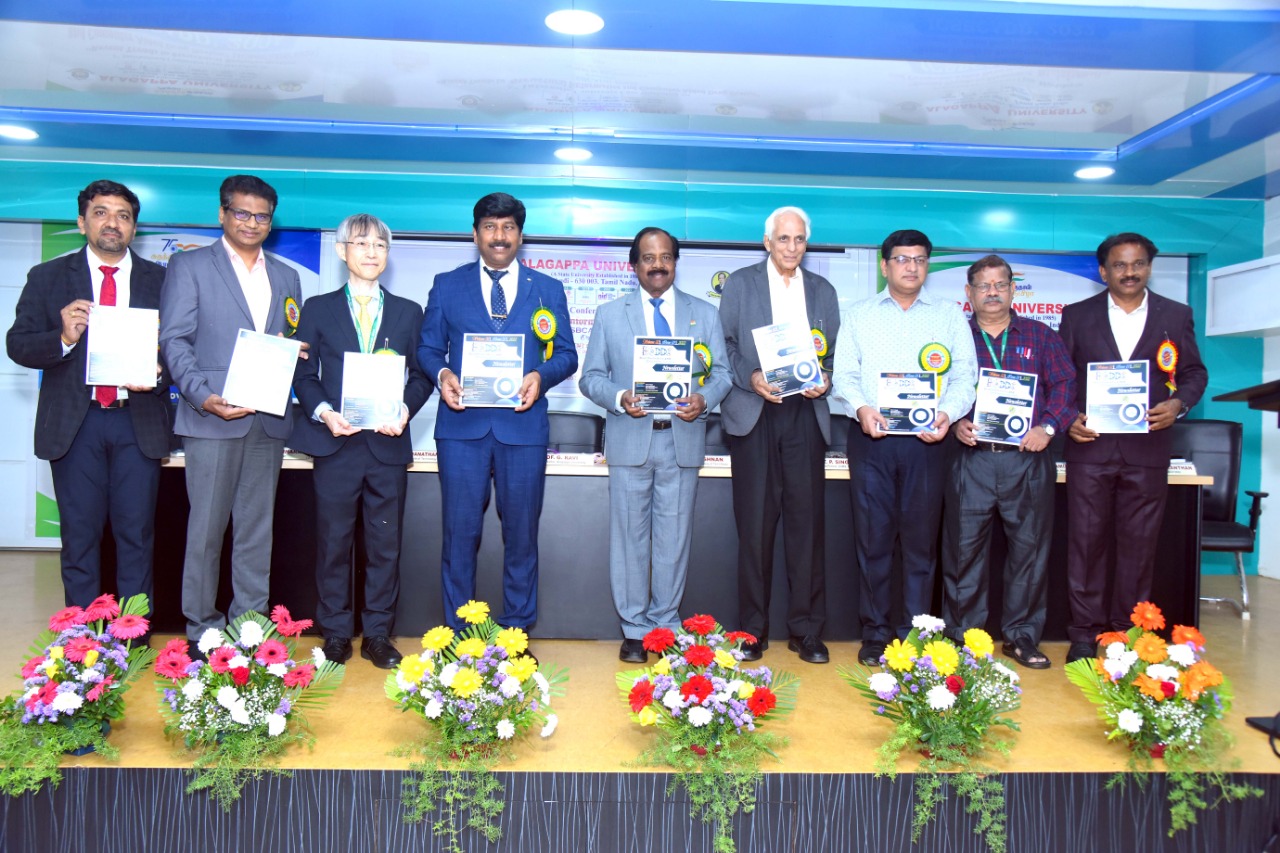
The BIC at Alagappa University employs a combination of computational analysis and in vitro studies to identify potential lead molecules crucial for combating life-threatening diseases. Alongside this research, the center plays a pivotal role in educating and mentoring students, scholars, and researchers from various institutions, nurturing them into adept professionals in the field of drug design and Bioinformatics.
The main objectives of the center are to provide teaching/training and organize workshops/ symposiums on Bioinformatics tools and techniques in drug designing, to create the necessary infrastructure, and to extend computer support services to the national research community, facilitating access to critical information. The center is striving to identify potential drug targets within nosocomial bacterial and viral pathogens, aiming to pinpoint vulnerabilities that can be exploited for therapeutic interventions. This includes the crucial task of identifying potent drug molecules specifically targeting proteins within these pathogens, an important step towards developing effective treatments. Additionally, the center probes into molecular cloning, expression, purification, crystallization, and structural studies of these identified druggable targets, aiming to comprehensively understand their properties and structures for informed drug development strategies.
The center's achievements include publishing research articles on life-threatening diseases and securing a patent (Application No: 202241057508) for a Synergistic Formulation for Preventing the Antibiotic Resistance Effect of Serratia Marcescens. Additionally, it successfully organized the International Conference cum Workshop on Recent Trends in Structural Bioinformatics and Computer-Aided Drug Design (ICSCADD’2022). At ICSCADD’2022, over 200 participants were introduced to computational healthcare methods and biomolecular structures for potent drug development. Furthermore, the center's Science Day outreach initiative welcomed students and teachers from rural schools and colleges, offering them the chance to visit the well-equipped labs at the Department of Bioinformatics and the BIC center. They interacted with faculty members and scholars, fostering valuable learning experiences.
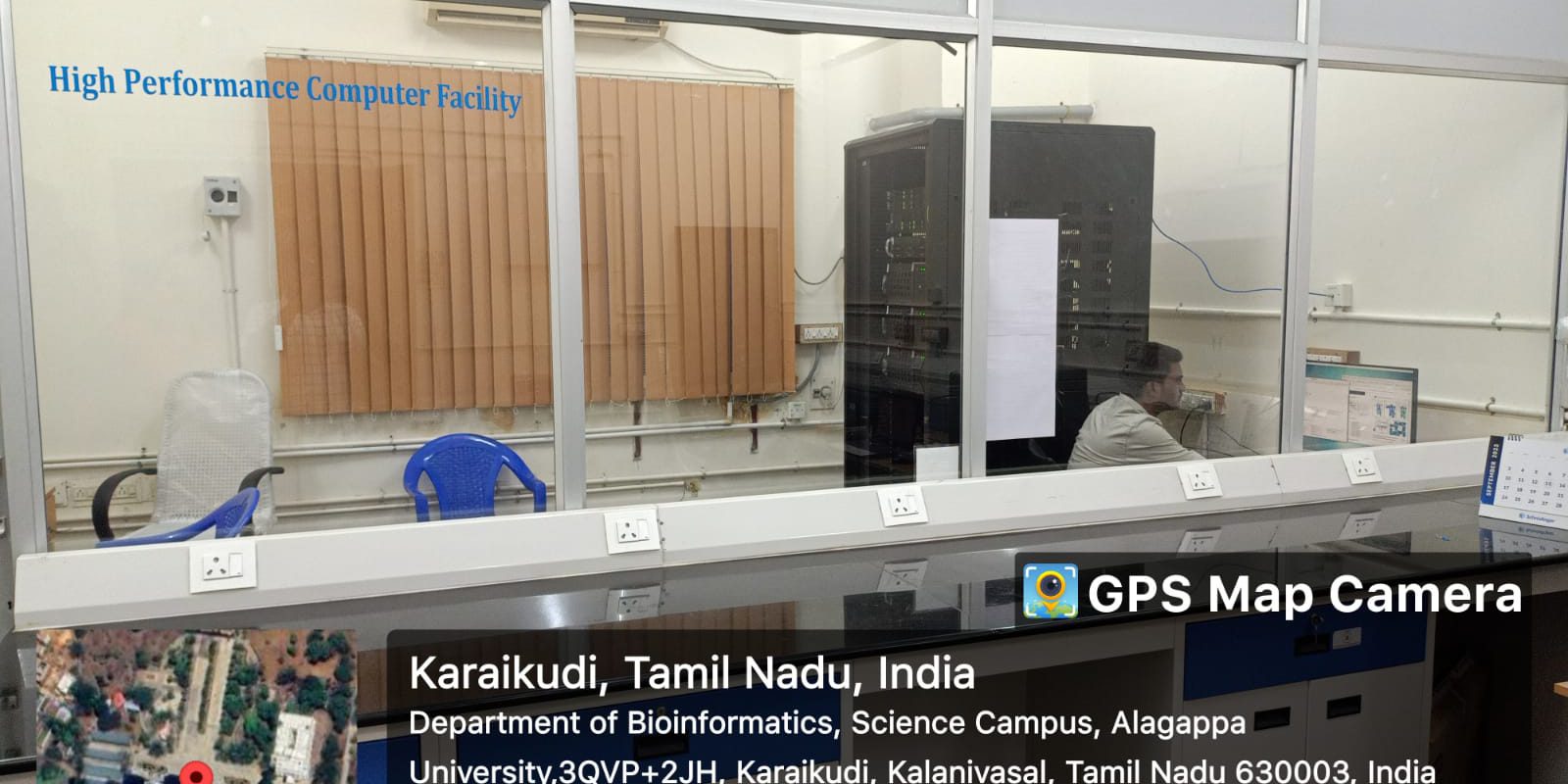
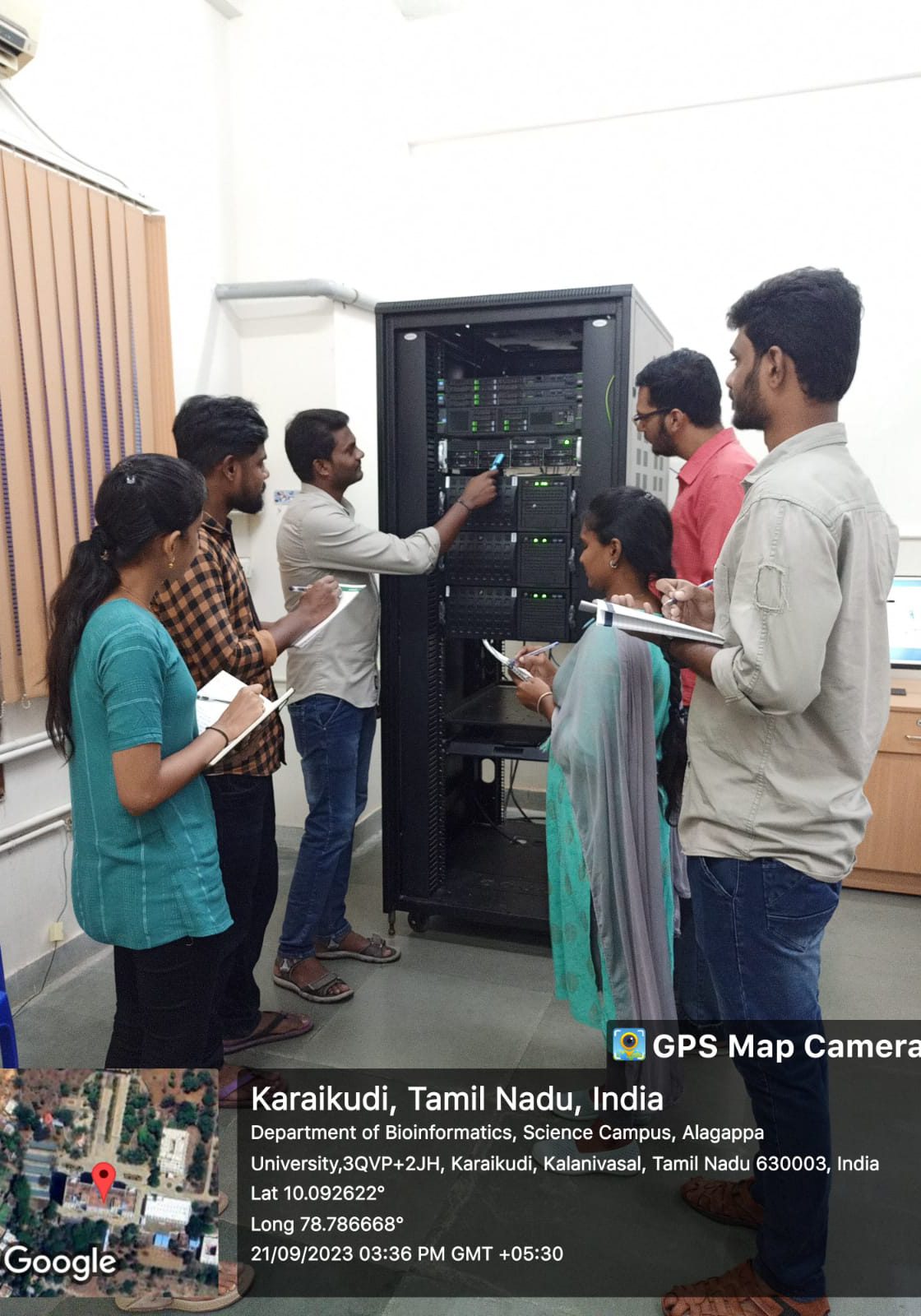
The computational infrastructure comprises a high-performance computing system featuring one Master Node alongside three cluster nodes, each equipped with 32 cores and 64 CPUs. Utilizing a combined approach of computational analyses and in-vitro studies, the center's focus lies in identifying potent lead molecules with minimal side effects. Furthermore, they're actively engaged in the development of specialized databases tailored for addressing life-threatening diseases. For instance, the center has successfully developed "HTNpedia: A Knowledge Base for Hypertension Research.”
The center actively engages with esteemed institutes like IISC-Bangalore and IIT-Madras, particularly in the realm of NNP initiatives. The collaboration targets developing tools and web-based databases to analyze specific proteins in Pak1 signaling, CDK dysfunction, and Tankyrase kinase-mediated cancers. This will aid in periodic database updates and ultimately characterize druggable targets and experimentally validate anti-cancer drugs from computational approaches.